Showing posts with label Road trips. Show all posts

Monday, January 9, 2017

Pangong Lake - A Gorgeous Wonder!


The journey was no less than the destination...
It is an amazingly beautiful drive of around 6hrs from Leh on a dramatic mountain terrain via Karu and Sekti village.

We started early morning with Tenzing, an experienced and cheerful driver from Leh. We drove through the vast barren landscapes with small villages and some greenery appearing every now and then. This was followed by the barren mountains of interesting shades of blue, grey and purple. They soon started to get white with snow and was fully snow covered as we approached The Chang La (17,590 ft.), world's third highest pass. We took a break to have hot meal of maggi and bread omelette at then-highest cafe of the world. Now the highest cafe is at Khardung La.
As the day progressed water on the roads started increasing. Glad we were to have listened to our driver and started early morning.

Travel Tip - One need to hire cab from Leh as taxis from outside Leh are not allowed to ply on this road. Start from Leh as early as possible. Water on roads will keep increasing as day advances.

 
The view of the road that we came driving on from Chang La

It is always good to start as early as possible from Leh 

The drive was more or less smooth except for a few places near the pass. There are many interesting road signs from BRO that make the journey even more enjoyable. Below are a few of them that fascinated me:
"Be gentle on my curves."
"Don't be a gamma in the land of Lama"
"Darling I want you but not so fast"
"Feel the curves, do not test them"
"Mountains are pleasure only if you drive with leisure"
"Love the neighbor but not while driving" 

A little farther on the road we met these cute little creatures called Marmots. They came out of their burrows as we were passing by. They did not seem to be shy at all. Rather they seemed curious and playful. It was fun playing with them and clicking them.

A curious Marmot spotted on the way to Pangong approaching the camera 

The Gorgeous Pangong Tso...
While we were still in the awe of meeting marmots, we saw a hint of brilliant blue in the barren brown terrains. I could not believe my eyes. The whole tiredness and the cold disappeared and we were filled with a joy, excitement and anticipation of what is in store. The moment is still engraved on my mind. It was surreal to see almost every shade of blue in sparkling water in these barren lands.

Brilliant hues of blue in the barren brown terrain - the first view of Pangong lake
This was undoubtedly one of the most beautiful creations of nature that I had ever seen. The sight of unending expanse of deep blue water and the spectacular Changchenmo range in the backdrop. 

This beautiful Himalayan lake Pangong Tso (Tibetan for "high grassland lake") is situated at a height of about 14,270 ft and is 134 km long. It extends from India to China and around one-third of the lake lies in China. The lake is 5 km wide at its broadest point.

Pangong is one of the largest brackish water lakes of Asia

The fascinating fact about Pangong Lake is that it has saline water and even then the water freezes. There is no aquatic life but some migratory birds can be spotted. It was a visual delight to watch the gulls and ducks play over the beautiful lake

Brown headed Gulls at Pangong

The first place we crossed was the army camp at Lukung. From here till Spangmik, the road was merely stone filled dirt track. Spangmik is the last village till where foreigners can go with an inner line permit.

Spending night with the locals at the height of 14,270 ft. ...
The village has merely 5-6 houses of which 2 provide the facility of home-stay. We chose to stay in one of them rather than at the camps nearby; One, because in a remote place like this I want to contribute to the economy of the place and second, I love to experience the local life and interact with locals.

Me with my hosts in the neatly organised kitchen of our home-stay at Spagmik

The evening was spent in the kitchen-cum-common room chatting and having endless cups of tea. There was a biker who had come from Bangalore and was exploring Himalayas from past one month on his bike. I still remember his adventure tales that inspired me to do Leh-Khardung La on bike.
The hot dal-chawal and ladakhi rotis with vegetables tasted heavenly delicious in the chilling cold of Ladakh. We were provided with a cozy room with wooden flooring covered with carpets and wooden roof. The bedding was warm and comfortable. And the hospitality of the hosts made it even better.

The home-stay at village Spagmik
One can also stay in the camps on the shores of the lake. The camps are made of canvas and the floors are covered with jute carpet to provide warmth. Each camp has an attached bathroom with cold running water. Thick blankets and a hot water bag is provided for warmth.
On the way back we visited Shay and Thiksey monasteries.

This was undoubtedly one of my best journeys so far. Have already visited Pangong thrice and every time it seems more beautiful.


P.S.- Pictures are clicked while on a road trip Himalayan Voyage with INDIAN TERRAINS in June 2012 and July 2014


Read More »

Saturday, May 7, 2016

Kinnaur in Pictures

Majestic snow-clad mountains, gorgeous green valleys, meandering rivers, small villages with rich culture, orchards and vineyards… that’s what define Kinnaur - one of the most beautiful valleys of Himachal Pradesh. Located in the Northeast of Himachal Pradesh, Kinnaur valley is around 235 Kms from capital city Shimla.  There are three high mountains ranges - Zanskar, Greater Himalayas and Dhauladhar in the district enclosing valleys of Sutlej, Spiti, Baspa and their tributaries.

The trail that can be followed to explore Kinnaur is Delhi – Shimla – Rampur - Sangla – Chitkul – Kalpa and minimum 6 - 7 days would be required to explore the area.

On the way from Simla to Sangla via Rampur. The road cut on the rocky hills is an engineering feat

Himalayan Griffon on the way to Sangla

SANGLA 
This is a beautiful valley located in the greater Himalayan range at an altitude of around of 2,696 Mtrs (8,900 ft). It is surrounded by forested slopes and the Baspa River flows into it. The area is rich in apple orchards, apricot, Wall-nut and Cedar trees.
There are many options to stay including budget hotels and camps.

Sangla Valley on the banks of River Baspa

A sweet lady from village Karchham in Sangla Valley


Fields of the pink coloured ogla, a small flower seed grown specifically in the Baspa Valley add to its beauty

CHITKUL
Chitkul, small village with population not more than 500 is situated at an altitude of 3,450 Mtrs (11,320 ft) on the foot hills at the bank of River Baspa. It is the last inhabited village in Sangla Valley on the old Hindustan Tibet road.

Chitkul produces one of best quality potatoes and peas in India 

Traditional wooden house in Chitkul, the last Indian village on Kinnaur side with an elevation of 3,450 m (11,320 ft)
The Kingyupa Temple, Chitkul
Snow covered peaks at early morning as seen from Chitkul
KALPA
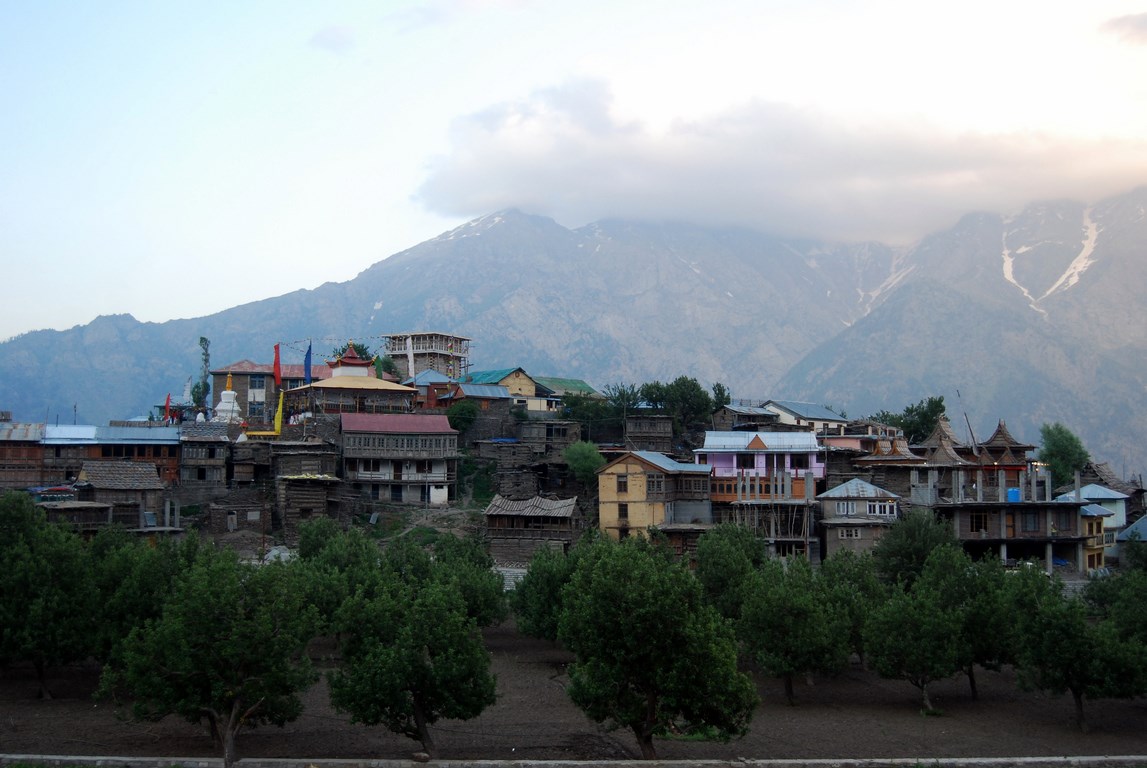
Kalpa is a small town in the Sutlej river valley located at an elevation of 2,960 m (9,710 ft) and is famous for its apple orchards. The local inhabitants follow a mix of Hinduism and Buddhism, and many temples are dedicated to both Hindu and Buddhist gods and goddesses. We get a breathtakingly beautiful view of Kinner Kailash peak from here.

Kalpa is a small town  in Sutlej river valley, Kinnaur
At the monasteray in Kalpa. Kalpa is a good mix of Hindu and Buddhist culture
Beautiful wooden entry gate of a temple in Kalpa
In case you want to explore it with professionals check the plan here
Read More »

Monday, May 2, 2016

Explore Sikkim

SIKKIM is undoubtedly one of the most beautiful destinations of INDIA. With high mountain ranges and massive glaciers, vivacious rivers and placid lakes, alpine meadows and dense forests; with as many as 5000 flowering plants, 500 orchids, 500 species of birds and 650 species of butterflies; with rich culture and colourful traditions... this tiny little state has lots to offer. The visitor to Sikkim will be spoiled for choice with each of the four districts offering unique travel opportunities. There's something for every type of traveller. Some remote villages in west and north will give you a sneak peek into Sikkimese culture, the wildlife sanctuaries here will give you a glimpse into the exotic Himalayan wildlife, if you are the road tripper explore old silk route in east Sikkim to get picture-postcard landscapes and some great hikes in the mountains of north and west will give you a superb mountain escape. The best time to visit Sikkim is from November to May.

When I was planning my trip to Sikkim I realised the need for such post where the information on the state is at one place, hence this post. I am putting down some information (collected from various sources) here that will help you decide what to chose as per your interest and plan your vacation to Sikkim.


WEST DISTRICT:

Visit west Sikkim for history and religion. This is where the first Chogyal of Sikkim was consecrated at Yuksum in 1642 and some of the holiest and most important monasteries of Sikkim were established, including Dubdi and Sanga Choling. Pemayangtse Monastery one of the oldest monasteries of the State and houses priceless thankas, icons, Buddhist texts, paintings and frescos. It was built in the 18th century. Originally established by Lhatsun Chempo, one of the revered Lamas to have performed the consecration ceremony of the first Chogyal (Religious Monarch) of Sikkim. 
About 3kms from Pelling and few minutes walk further down from Pemayangtse Monastery are the Rabdentse ruins. Rabdentse is the second capital of the erstwhile Kingdom of Sikkim after Yuksom and till the year 1814 AD, the Kings of Sikkim had ruled the State from this place. 


West Sikkim has beautiful terrain with lakes and waterfalls in abundance and has some great trekking routes. Yuksom situated amidst pristine hills is the base camp for Dzongi trek. It is also the point from where one can visit the Kanchendzonga National Park.
An easy four kilometers trek from from Hilley takes one up to the Varsey Rhododendron Sanctuary which is in bloom from March to April. One can also trek from Soreng and Dentam.
Khecheopalri Lake also known as the wishing lake is surrounded by forest and is believed that birds do not permit even a single leaf to float on the lake.
Khecheopalri Lake


Stay Options:
If you want to experience the living in the lap of nature with basic facilities stay at homestays in Hee burmoik, Khechiopalri or Dentam. And if you like staying at touristy location with all facilities stay at Pelling.

EAST DISTRICT:


Apart from the beautiful capital city of Gangtok, east Sikkim offers a lot more. If you are an adventurous soul and want to explore the unexplored, plan a road trip on the old Silk Route through Aritar, Zuluk, Thambi, Gnathang and to Nathula. It will take you through some breathtakingly beautiful landscapes and stunning views of Kanchenjunga range. Beautiful zig zag roads, amazing view of Kanchenjunga throughout, varied flora and fauna and lovely locals... all this makes the drive one of the most beautiful drives of India. You will cross through beautiful lakes like Kupup and Memenchu and waterfalls like Que Khola on the route.

Aritar is blessed with Lush green forests, sweeping hills of paddy fields and placid lake and monastery hidden inside deep forest that makes it a perfect destination for nature lovers.
The view of Kanchenjunga and Zuluk loops (32 hairpin bends) from Thambi view point is amazingly beautiful.
Gnathang is a beautiful small village nestled in a valley and has decent stay options.
Apart from this, in east you can also visit the beautiful Tsomgo Lake, the historically important Nathula pass, as well as many monasteries and temples. 

Zuluk Loops
Stay Options:
Homestays and guest houses in Zuluk, Aritar or Gnathang offer beautiful views and a feel of staying in a Himalayan village with touch of local culture. In Nathang temperature goes down to sub zero and water freezes when you wake up. So be prepared for that.
If you are looking for luxurious comfort stay in hotels at Gangtok.

Explore the silk route in east sikkim with professionals.


SOUTH DISTRICT:

South Sikkim, the smallest district of Sikkim is a fairy tale land with picturesque villages and high hills. It is a good destination for a short treks and village excursions.

Namchi, 80 kilometers from Gangtok offers a panoramic view of snow capped mountains. The head quarter of South Sikkim is a fast developing tourist destination. Namchi is famous for the flower festival which usually held in the month of February.
Ravangla is an ideal place for short treks. The trek to Meanam – a town situated on the ridge between the Meanam and Tendong hills, from Ravangla takes about 4 hours and from Maenam hill to Borong village
Borong is a small typical Sikkim Village with a beautiful set up. There is a hot spring which is known as Borong Tisa Chu.
Temi Tea Garden the only tea garden in Sikkim produces one of best quality tea in the international market. The garden is spread over a gentle slope of hills from Tendong and offers an extra ordinary view of surrounding villages.
Sikip, located on the banks of river Rangeet is an excellent fishing spot and river campsite.
Phur-cha-chu or the Hot Spring is an ideal for bird watching and butterflies.
Ralang Monastary, Sinon Monastery, Kewzing monastery are also places to visit in South Sikkim.

A typical village house
Stay options
Yangang, Tinkitam, Kewzing, Barfung & Bakhim are small villages with home stay options. You can also opt to stay at Namchi.


NORTH DISTRICT:

Visit North Sikkim for its heavenly beauty.  Sikkim tourism is emerging fast and North Sikkim is a must visit.  The breathtaking view of Mount Kanchendzonga, the fragrance of variety of flowers, the quietness of sparkling lakes and the gurgling of rivers make North Sikkim a destination that no nature lover should miss. Perhaps the most picturesque of all the districts, Mangan District Headquarter of North District is 67 kms from Gangtok. A three day music festival is held at Mangan in December every year. The roads are steep and winding so be prepared for a hectic trip. But all the effort surely will be worth it.

Chungthang, 95 kms from Gangtok, is situated on the confluence of the river Lachen Chu and Lachung Chu and it is the starting point of the river Tista. The valley is believed to have been blessed by guru Rimpoche and one can visit the Holy Guru Ihedu to see the foot and palm left behind by the patron saint. The place is rich in bio-diversity with a wide variety of plants, wild life & orchids.  Just 23kms and 29 kms away from Chungthang there another two important valleys Lachung and Lachen.
Yumthang, 140kms from Gangtok is at an elevation of 11800 feet. It alone is enough to satiate the most demanding, with its panoramic valley of Flowers. The valley has Shingbha Rhododendron Sanstuary 24 verities of rhododendrons. There is a hot spring and just 24 kms away Katao offers a panoramic view of snow capped peaks. A must-see here are the Yumthang "Tsa-Chu" - hot springs and the vibrant Sikkimese tribal culture and customs.  
Singhik has a number of interesting short nature trails for one to three days along the higher ridges of the surrounding hills.
Gurudongmar Lake is a enthralling lake of North Sikkim at an altitude of 17,150 ft. and surrounded by snow capped peaks
Singhik, Phodong Monartery, Phensong Monastery, Kabi Longstok, Mangan etc.are few other places to visit from Lachen similarly Katao, Yumeysomdong is close to Lachung. 
North Sikkim is known for its rhododendron forest and the snowfall. There are few trek routes also to Green Lake.
Lachen
Pic downloaded from net
Stay Options
One can stay at Lachung and Lachen. Expect basic homestays with warm hospitality and beautiful locations.


Read More »

Thursday, February 25, 2016

Zuluk Loops - One of the best roads to drive on in India

In the remotest corner of the Himalayas, the great ancient explorers had set up this trade route called silk route that connected India to Tibet and later other cities also became part of it, eventually making it the largest network of trading. This route re-shaped the way people did trade and exchanged cultural ideas. This route passed through Lhasa, Nathu La and Jelep La Pass and finally reached the port of Tamralipta (present Tamluk in West Bengal) from where it took to the sea and reached far east.
Located on this route in lower Himalayas of East Sikkim is a beautiful small village Zuluk. It was once a transit point to the historic Silk Road from Tibet to India. There is also an Indian Army base at Zuluk, which has been used as a transit camp for the army movement to the Chinese border hence permit is required to visit Zuluk and beyond which can be obtained from Rongli (between 10am -2pm). You can also sign up for the Sikkim trip on this route with ChaloLetsGo

Beautiful zig zag roads, amazing view of Kanchenjunga throuhout, varied flora and fauna and lovely locals... all this makes the drive from Zuluk to Thambi one of the most beautiful drives of India.


The zig-zag road - The road through Zuluk has almost 32 hairpin turns and is no less than a wonder. Driving on this road is any road-tripper's dream. Mt Kanchandjunga will follow you throughout the drive. The landscape views are truly breathtaking especially during the sunset.

Varied flora and fauna: Zuluk has high diversity of Himalayan flora and fauna. The place shelters variety of birds like Monal Pheasant, Blood Pheasant, Khaleez Pheasant, Snow Pheasant and others. You may also catch a glimpse of Himalayan Weasel, Red Panda, wild dog and deer in the high hills.


Amazing view of Kanchenjunga: 14 kms away from Zuluk is Thambi View Point that offers a panoramic view of the entire Mt. Kanchenjungha range. Watching the sunrise over Mt. Kanchenjunga and its allied peaks from Thambi View Point at 11,200 feet is a surreal experience. The golden rays of rising sun kiss the snow clad peak of Kanchenjunga, which slowly turns crimson and then golden and finally silver. The spectacle is truly breathtaking.


Zuluk is accessible throughout the year. During winter Zuluk faces high snow fall and freezing temperatures and in summers are wet and foggy here. During summer Zuluk and its surrounding hills remain covered with different kind of blooming rhododendron flowers.


Read More »

Sunday, October 25, 2015

Spiti Sojourn - A Memorable Journey Through Himalayan Villages

High rocky hills kissing the sky, muddy water stream cutting furiously through the hills and small villages popping-up their beautiful face every now and then. On this road trip to surreal Spiti from Delhi I succumbed to the magic of the Himalayas. Driving on those rough terrains through mighty Himalayas at days and looking at the innumerable stars at pitch dark nights has made for some of the best experiences of my life and has left me wondering about my tiny existence in this whole gamut of Universe. The beauty of these gigantic mountains, the immensity of the lands on which they look down, the simplicity of the people living here all worked on my mind like a spell.

Journey to the Spiti Valley - a desert mountain valley located high in the Himalayan Mountains in north-east Himachal Pradesh, India, is the most beautiful drive I’ve done so far. It isn’t a very smooth drive – bumpy roads, no petrol pumps for hundreds of kilometers, low oxygen levels due the high altitude – but it surely is worth all the effort. Quaint old monasteries, prayer flags fluttering in the wind and monks in their ochre robes, add to the mystic charm of Spiti. The scenic mountain villages perched on mountain crests, pristine rivers, the vast landscapes and harsh conditions are all a part of the package that constitute this adventurous Himalayan Journey.

It has been said that everyone who visits Spiti begins a new life. Spiti plays an interesting, very different hand, luring you to its untouched surreal beauty and offering an introduction to the simpler ways of life… I can never forget my interaction with locals at Ribba and Giu. There are some extraordinary stories too - of 500 years old mystical mummy that was discovered some 25 years back by an excavation team, of painted caves where monks stayed some hundred years ago... and many more. Many-a-times I wished that this trip to Himalayas would never end, that I never come back to the city.


Experience Kinnauri Culture at Kalpa
Driving along the picturesque Hindustan-Tibet road which is cut in rock and goes along the Sutlej River we reached Kalpa. Our tired souls got elated looking at an impressive view of the Kinnaur Kailash ranges that includes Kinnaur Kailash (6349m) and Jorkanden (6473m) peaks. Kalpa, at 2,960 m elevation is a beautiful town famous for production of high quality apples and Chilgozas (Pine nuts). It’s interesting to see how Hinduism and Buddhism have undergone a religious mixing here, along with some indigenous shamanistic practices. It was clearly evident in the architecture of Narayan-Nagini temple and Hu-Bu-Lan-Kar Monastery. Walking along the narrow lanes of this village we got a good glimpse of Kinnauri culture. Kinner houses are made of wood and have storerooms for keeping dried fruits and separate wooden storage structures called kathar for grains.


We woke up to a mesmerizing morning in the lap of Himalayas. It seemed the mighty peaks were guarding this silent sleepy village and now when day is breaking its changing colors seem to be signaling the villagers to wake up. As the bright day gradually took over the dark night snow covered mysterious hills changed its colors from black to grey to silver to white to golden. We couldn't take our eyes off the spectacular view as the golden rays of rising sun touched the snow peaks.


Taste local brew at Ribba
Well known for its grape vineyards, plum orchards and the local brews made from local variety of grapes called Rokh Dakhan in local dialect, Ribba is a picturesque village travelers hardly know about. We were fortunate to have found Dharam Kumar Negi who took us around the wonderful trails through the fruit orchards to visit Kasuraj ji and Ribba Temple where Hindu gods and Buddhist deities are worshiped side by side. He took us to his house as well for tasting Angoori. He was quite reluctant in selling as they want to stock it for those 6 months when the whole village is covered with deep snow and cut off from the whole world.


In contrast to the romanticism at Kalpa, the stretch from Ribba to Nako was harsh. There were huge Rocky Mountains staring at us, no habitation for miles and the tough terrain seemed to be shouting to remain alert every moment. Passing through Khab which is hardly 13 km from Shipki La border Tibet, we reached Nako, situated in Hangrang Valley.


On the way to Nako

Nako - Village that hasn’t changed from ages 
Passing through Khab which is hardly 13 km from Tibet border we reached Nako, situated in Hangrang Valley. It lies in the sensitive restricted zone along the border and therefore requires an Inner Line Permit to travel through. Walk around the small village absorbing the traditional atmosphere and architecture, it looks like the village hasn’t changed from ages. The existence of lake formed out of the masses of snow above adds to the beauty to this tiny village. From behind the lake you can walk uphill towards chortens. It is an ideal place to get an amazing view of this tiny village.

Sun seemed to be in happy mood and chose to treat our eyes with a breathtakingly beautiful view. Its golden rays touched snow kissed silver peaks one by one turning them golden. And what pleasure it was to witness gradual conversion of this beautiful evening into a gorgeous starry night! 

Nako Village
Further on the trail was Tabo, famous for the ancient monastic complex that preserves some of the ancient paintings and stucco images that date back to 11th century. We roamed around the complex trying to absorb the serenity of the place. Prayer flags fluttering in the wind and glowing jovial faces of kids, youth and old alike, we felt as if we have reached some different world altogether where people knew no sorrow. Smile was a part and parcel of everyone’s appearance. On the cliff-face above the complex were a series of caves that at some point were the dwellings of monks. Traces of painting can be seen in these caves as well.

Kaza - The Largest Township in the Valley
Located at an altitude of 4000mt. on the left bank of Spiti River, Kaza is the largest township in the area. 
Kye monastery is one of the main training centers for Lamas in the region. There were narrow corridors, low rooms, dark passages, difficult staircases and small doors that lead to prayer rooms in the monastery. Standing on the roof top of Kye monastery I couldn’t stop myself from wondering how life is so different here. Far from the complexities of city life, living in this quietude is a distant dream for most of us. 
 
Ke Monastery
Next day we explored the villages of Langza, Hikkim and Komic. We posted a letter from the world’s highest post office at Hikkim (4440m), found some sea fossils while strolling around Langza, and interacted with some ambitious kids at Komic, world’s highest motorablevillage (4500m).

Hikkim Village
Driving through some magnificent landscapes we reached Kunzum pass. The road beyond that to the Chandratal Lake was bad. It was a demanding drive on bumpy road. But the mere sight of Chandratal was a reward enough for all the hard work - serene surroundings, still blue water and clear reflection of snow covered peaks. We set our tents on the vast meadows on the bank of the lake. Sitting by the lake looking at the reflection of the snow covered peaks early in the morning made me bow to the beauty of nature. 

Chandratal
Our tired city souls were now fully rejuvenated to start our journey back.

Read More »

Thursday, August 28, 2014

5 MUST-DOs on a trip to SPITI


Journey to SPITI is amazingly beautiful but a tough one. High rocky hills kissing the sky, muddy water streams cutting furiously through the hills and small villages popping-up their beautiful face every now and then. All this has a price to pay - bumpy ride, road blocks, no petrol pumps for kilometers and low oxygen levels. But if you are a true traveller you will enjoy every moment of the journey... "Journey is Destination" after-all. 


Journey through treacherous roads

Based on my travel experiences, here are some MUSTs on this trip: 


1. MUST SCHEDULE AROUND - 
Lafarcha Fair, Kaza
Try and plan your trip around local festivals. There is no better way to experience their culture than to be a part of the festivities. Below is the calendar of fair and festivals in the region:

MonthPlaceFair/Festival Name
Jan/FebPattan ValleyKhogla
Jan/FebLahaul ValleyHalda
FebuaryLahaulFagli
FebuaryBhaga Valley (Lahaul)Gothsi (Gochi)
June/JulyShashur, Kardang, Gemur, Kyi Gompas in Lahal & SpitiTsheshu Fair
AugustKaza (Spiti)Ladarcha Fair
AugustUdaipur (Lahaul)Pauri Fair
AugustKeylong (Lahaul)Tribal Fair

2. MUST STAY - 
Stay at home-stays in villages like Langza and Kibber. This will give you an opportunity to support the locals and also to understand and feel the culture of the place. The home-stay will be a basic accommodation but hospitality is not about sterile environments, but welcoming ones. Home made traditional meals will be accompanied by great conversations and you will find out and learn about not only places but also people. 

You can comfortably chose to stay in Kaza (that have all the facilities and comforts) and do day trips to these villages but if you have made an effort to do this treacherous journey and reach these remote villages, as an aware citizen and a good human being you must live with them for a night to understand the life of high Himalayas and support the poor villagers in whatever possible way. The villagers have high self respect and will not accept any charity unless you take their services.


3. MUST DO
  • Post a letter/ post-card from the highest post office of the world, HIKKIM, elevation: 4440mt.;
Posting a letter from 
the highest post office of the world
World's highest post office

  • Take a small walk around LANGZA, you might stumble upon some sea fossils;
Picking up fossils while walking around Langza

  • Do stay overnight at Dhankar - the clear sky and countless starts will amaze you. And do trek to Dhankar lake... Its an easy trek of 2hrs worth doing. 
Trek to Dhankar lake, monastery and village in the background

4. MUST VISIT
  • Dhankar monastery dramatically located on a cliff overlooking the confluence of Spiti and Pin Rivers.
  • The ancient paintings and stucco images that date back to the 11th century at TABO. You are not allowed to click those paintings.

In TABO caves 
  • World's highest village COMIC 
World's Highest Village Comic

5. MUST DRINK -  
  • Ghur-ghur tea - It's salted tea with butter in it. Locals believe that you don't feel thirsty frequently if you drink this. 
  • Also don't miss masala tea that monks serve generously to visitors of KEE Monastery.  
  • Local wine made from apple and apricot. It's not easily available but if you have good PR skills and have made friends with locals, you might be lucky to be offered some.
  • The mountain water we get in those high hills is in its purest form. Make it a habit not to buy mineral water when in Himalayas.  

Since it's a tough journey I would suggest to plan it with experts and make the best of your experience. I suggest doing it with INDIAN TERRAINS, they have an itinerary that covers it all.

HAPPY TRAVELLING!

Read More »

Thursday, May 22, 2014

What all to pack on a road trip to LADAKH

Now that you have decided to explore Ladakh on road, how and what to pack is very important. Needs of every individual will vary but  the following things shouldn't be missed out on.

CLOTHING: In Ladakh it is best to dress in layers, since majority of coldness is due to wind chill and temperatures can change rapidly depending on the place, time and weather. Hence dressing in layers will allow you to add/subtract layers as and when needed. So make sure apart from your regular clothes, you are also carrying a sweater, gloves, cap (protect head and ears from cold winds), warm inners and if possible, air/water resistant jacket. Pack separately for the road travel and for leh and surroundings.
MEDICINES: Carry Diamox if you aren’t allergic to sulfur drugs as it helps reduce the symptoms of altitude sickness. Additionally, carry general medicines for headache, fever, stomach ache, cold and cough syrup. Also prescribed medicines you are on.

PERSONAL ESSENTIALS:

  • Sunscreen lotion: UV rays at high altitude can be quite damaging to the skin, even during the harshest of winter, so don’t forget to carry a good quality sunscreen lotion
  • UV sunglasses: Having decent quality UV sunglasses (Fastrack ones are available for as little as Rs. 800) is quite essential, especially if you are traveling early in the season or during winter, when mountain passes have a lot of snow cover and sunlight reflecting from the snow can be even harsher.
  • Lip balm: Dry and cold weather of Ladakh will make your lips dry, which can get quite painful due to cracking and skin coming off, so make sure to carry a lip balm or Vaseline.
  • Mustard oil: Mustard oil can be used for moisturizing skin, putting it in your hair and for lubricating insides of nostrils, which can become quite dry and painful due to dry and cold winds of Ladakh.
  • Other essentials like Soap, toothbrush, toothpaste, comb, toilet paper, shaving kit and face wash.
FOOD ITEMS:
  • Water: Water is the most essential thing while traveling in Ladakh, since dehydration can further complicate health issues at such a high altitude. So make sure you are carrying at least couple of liter of water per person all the time and drinking at regular intervals.
  • Glucose: Carrying water mixed with Glucon C/D is a good idea while traveling at high altitude, as it provides instant energy on the move, when your appetite is likely to be reduced due to AMS and at the same time, doesn’t act as a diuretic, like most caffeinated energy drinks. Carry couple of small packs with you, which you can mix in water, at the beginning of the day.
  • Chocolates, biscuits and nuts: Carrying couple of chocolates, a pack of biscuits and few hundred grams of almonds, raisins and cashews is a good idea, as these provide instant energy and easy snack and don’t take up too much space. Those who love spicy food, make sure to carry pickle or sauce, since Ladakhi food is a bit bland.
DOCUMENT AND IDs: It is essential to carry at least one government issued identity card and couple of photocopies of it, since it is needed while applying for inner line permit and at certain places, to register at the check post. You should also carry your medical insurance card (if you have one), your printed itinerary, couple of copies of your flight ticket (if traveling by air) and list of important contacts (useful in case your mobile phone stops working).

BATTERIES AND MEMORY CARDS:

  • Spare camera batteries: Carry at least one spare set of batteries required by your camera, since in cold environment, batteries can die quickly.
  • Car charger or battery bank: If you are an avid smart phone user and planning to log your route on your favorite GPS App, then make sure you are carrying car charger or a power bank with at least 4000-5000mAH capacity to keep your mobile phone running throughout the day.
  • 3 socket Belkin Surge ProtectorWhile it is a little large in size, 3 socket Belkin Surge Protector will not only keep your gadgets protected from power surges, but will also allow you to charge multiple devices simultaneously and at the same time, provide the crucial cable length to safely place your gadgets in rooms with idiotic power socket locations that sadly many hotels have.
  • Enough memory cards to last you the entire trip: Doesn’t matter if you are carrying a laptop or planning to burn CDs/DVDs at Leh, carry enough memory cards to cover your entire shooting duration in Ladakh. If needed, borrow from friends but don’t depend on laptop HDDs or worse still, virus infested cyber café computers to copy and save your photographs.
  • Torch: Not really needed if your mobile phone has one, but if in case it doesn’t, carry a small LED one.
MONEY: While our recommendation would be to carry enough cash you need, to avoid wasting time withdrawing cash, it may not be feasible for everyone. So please keep in mind that ATMs beyond Srinagar and Manali are only available in Kargil and Leh and they too are few with often long queues in front of them.

I personally recommend Himalayan Vogage – An Ultimate road trip to Ladakh . being organised every year by INDIAN TERRAINS perfectly chalked-out itinerary and an understanding trip leader.
Read More »

Friday, May 16, 2014

Making up your mind for LADAKH

You want to go to Ladakh but have some queries? Read on... 

What is the best time for Ladakh?
June to September is the good time to explore Ladakh. 

Whether to fly to Leh or do a road trip? 

In today’s zipping lifestyle, all it takes is to take a flight to Leh, hire a cab, and visit the exotic locations following the established routes. Now that is not the right way to explore Ladakh...
Take time out from your busy schedules and do it on road enjoying the drive through lush green pine forests; passing through numerous old monastic complexes; witnessing drastic scenery changes from green pines to rocky mountains that change color at every turn… grey, blue, pink, purple, violet… it reflects all shades at some point. 
Its once in a lifetime experience so don't settle for anything less than a road trip just because its difficult to take much time off from your busy schedule. The smooth drives gets difficult and then dangerous on the rocky terrains of high Himalayas, but then every second and all the effort will be worth it!
Weather or not my body will be able to sustain high altitude?
We know mountains are not the same as the plains. Temperature, humidity, oxygen content, air pressure etc, all work in various ways on your body; a body that is not acclimatized to these conditions. A condition that, many a times, hits travelers is AMS (Acute Mountain Sickness) also known as Altitude Sickness.
This condition can easily be avoided. The key to avoiding AMS is a gradual ascent that gives your body time to acclimatize. Spend at least one night at an intermediate elevation below 3000 meters. At altitudes above 3000 meters, your sleeping elevation should not increase more than 300-500 meters per night. So be very careful while finalizing your itinerary. 
I personally recommend INDIAN TERRAIN'S Himalayan Vogage – An Ultimate road trip to Ladakh .  I am an asthma patient and I did Ladakh in 2012 without any Altitude Sickness.Thanks to their well planned itinerary. 

Things to avoid: Alcohol, Sleeping pills (acetazolamide is the sleeping tablet of choice at altitude) and Narcotic pain medications in more than modest doses. Respiratory depression (the slowing down of breathing) can be caused by various medications, and may be a problem at altitude. 

Take rest for a day (don't involve in anything that exerts you) after reaching Leh.

More tips like what all to pack, how to make the best of the trip etc. in the next post. Keep reading.
Read More »